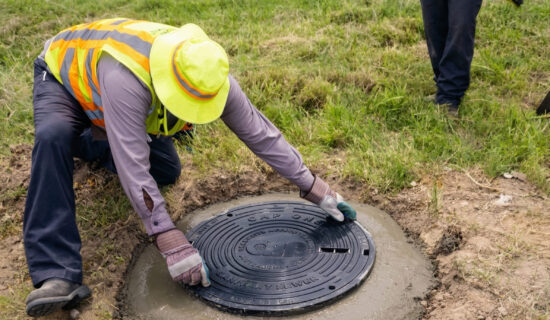
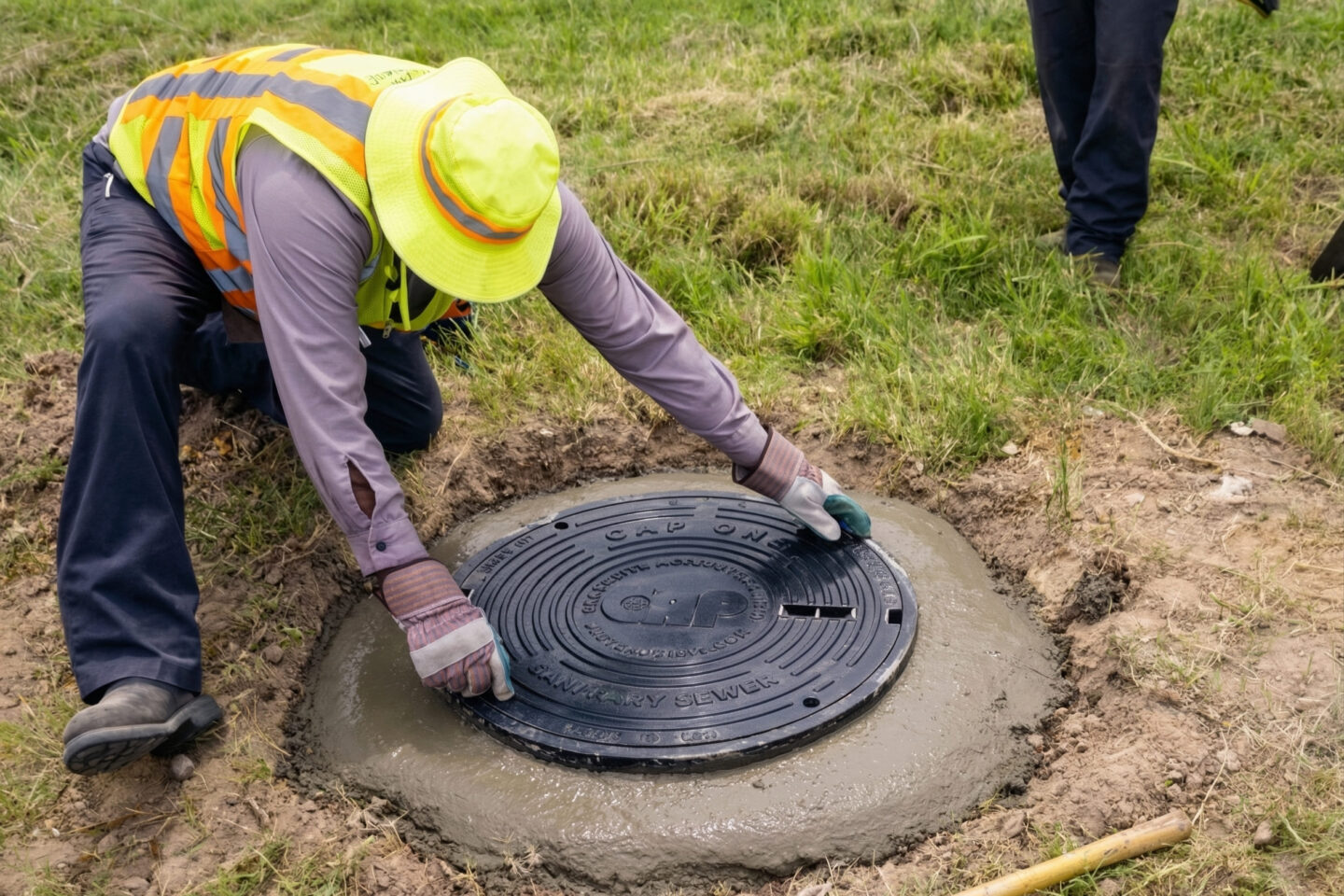
What Are Composite Manhole Covers and Why Are They Taking Over?
Manhole covers are often overlooked, yet they play a direct role in system reliability, public safety, and operating costs. They provide secure access to underground sewer, water, electrical, and broadband systems while protecting those networks from debris, unauthorized entry, and stormwater. The growing focus on infrastructure performance is reflected in the global manhole cover market, valued at more than $4.1 billion in 2024 and projected to reach $5.5 billion by 2035.
Beyond traffic loading, one of the most persistent challenges utilities face is sewer inflow, which is the entrance of stormwater through pick holes, poor seals, and ill-fitting covers. Inflow increases treatment volumes, lengthens lift station pump run times, and raises the risk of overflows during rain events. These overflows can send untreated sewage into streams, lakes, and oceans, making them a leading cause of water pollution.
Why Traditional Covers Are Becoming a Liability
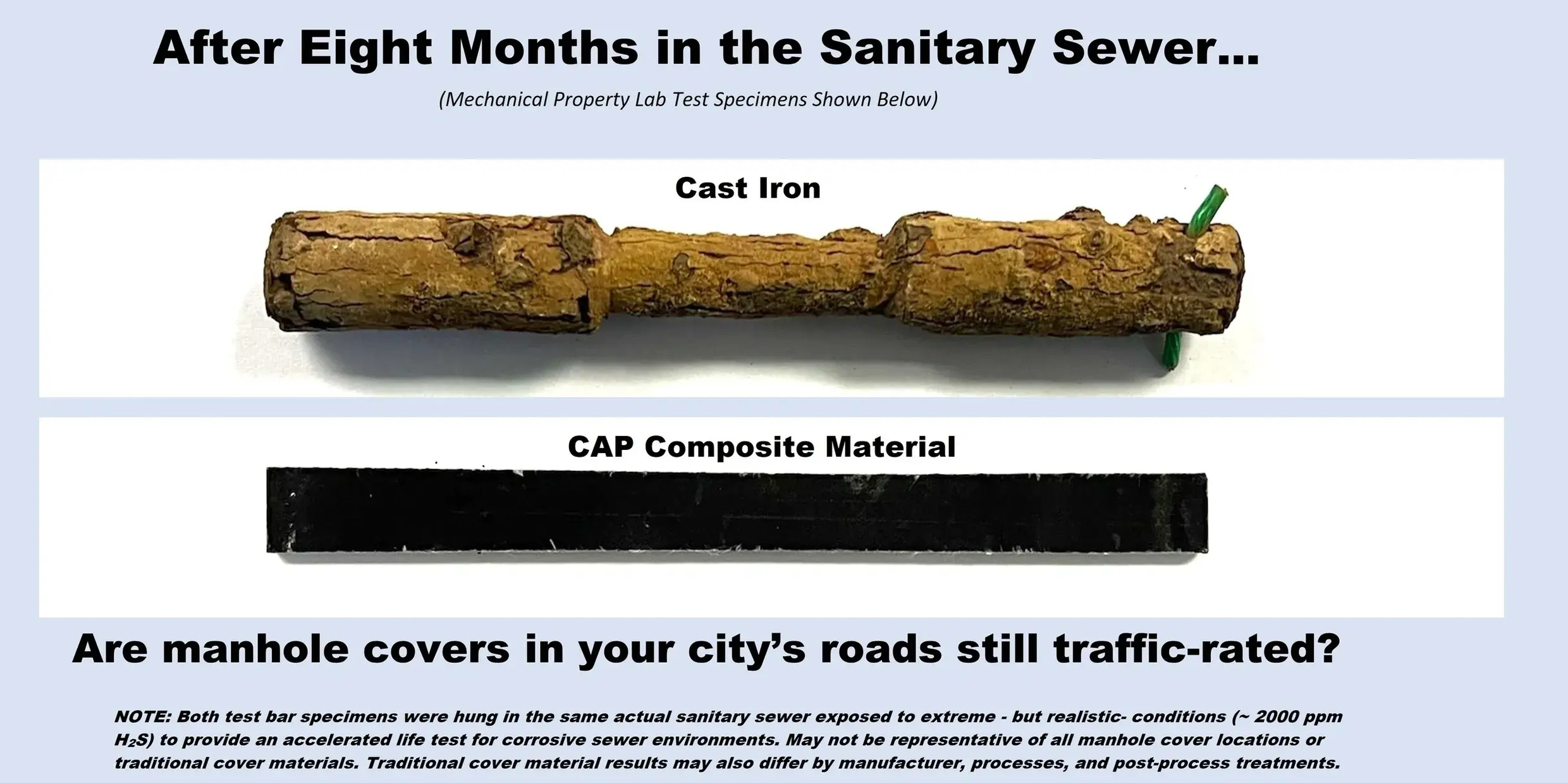
Historically, manhole covers were manufactured from cast or ductile iron to withstand heavy traffic loading. Structurally, iron* performs well, but in modern sewer environments, it presents long-term durability challenges. Inside the sewer system, bacteria generate hydrogen sulfide gas, which is then biologically converted into sulfuric acid. It is this sulfuric acid that aggressively attacks most iron, accelerating corrosion, degrading seating surfaces, and causing covers to swell, stick, rock, or lift over time. Corrosion across U.S. infrastructure alone contributes to an estimated $276 billion in annual losses.
In addition to material deterioration, iron covers can present operational and safety concerns. Individual units often exceed 200 pounds, increasing the risk of crew injuries during removal and reinstallation.
Beyond chemical deterioration, many traditional covers also present a growing security concern. Because of the metal scrap value, theft remains a persistent issue in many municipalities. Stolen covers create immediate public safety hazards, expose utilities to liability, and require costly emergency replacements, often long before the asset has reached the end of its intended service life.
Together, these chemical, operational, and security pressures are driving municipalities toward composite manhole covers engineered to resist corrosive attack, reduce maintenance, deter theft, and maintain stability under repeated traffic loading.
This is where composite manhole covers, such as CAPs from Composite Access Products (CAP), offer a modern solution that addresses durability, safety, and operational efficiency.
Why Composite Manhole Covers Are Changing the Industry
The transition from traditional to composite materials represents a significant shift in manhole cover technology. Composites offer a combination of performance benefits that meet the needs of municipalities, utilities, and contractors.
- Corrosion Resistance: Composite manhole covers are unaffected by hydrogen sulfide, moisture, salt, and chemicals that degrade iron, in concentrations found in sewer exposure. Strength does not decline over time, and covers won’t seize or stick the way many iron covers do.
- Structural Performance: Properly engineered composite covers meet H-25 traffic ratings, while staying flat and seated instead of warping or rocking.
- Safer Handling: Weighing about half as much as iron, composite covers reduce back injuries, finger pinches, and the need for prying or hammering seized covers.
- Watertight Sealing: Composite systems are designed to prevent inflow, reducing excess stormwater entering sewer systems. This lowers electricity consumption, carbon emissions, pump repairs, and capital expenditures for new equipment.
- Theft Deterrent: Composite covers contain no recyclable metal, removing the incentive for scrappers and eliminating the replacement costs and public safety risks that follow stolen covers.
For utilities under pressure to reduce inflow and extend asset life, composite manhole covers address problems that traditional was never designed to solve.
Operational Advantages for Municipalities and Contractors
Municipal crews and contractors adopt composite manhole covers for practical reasons:
- Improved Safety: Composite frames are 1/4th the weight of iron frames, allowing for remote installs where transporting iron assemblies is extremely difficult.
- Regulatory Compliance: CAP composite covers meet traffic load requirements, are approved by several state DOTs, and comply with Build America, Buy America (BABA).
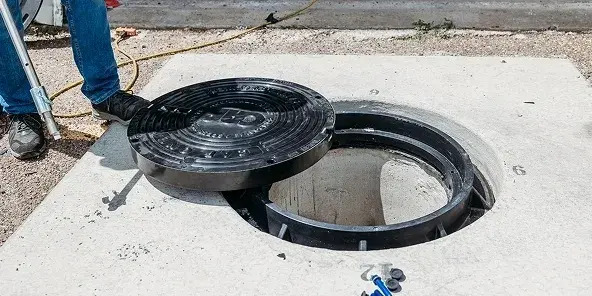
- Faster Installation: Lighter covers simplify handling and reduce crew time compared to iron. CAP also offers riser solutions, like the HALO™ ring, which are designed for overlays and grade adjustments. The innovative stackable design eliminates the need for excavation during subsequent repaving projects, saving an estimated $5,000 to $10,000 per manhole and making maintenance more cost-effective and efficient.
- Wide Application Use: Around lift stations, air release valves, and near flood zones or bodies of natural waterways are where the highest gains from corrosion and inflow prevention can be achieved.
The result is fewer service calls, safer crews, and more predictable maintenance.
Technology-Driven Performance, Confirmed in the Field
The design-driven benefits of modern composite manhole cover systems translate into consistent, field-verified results reported by municipal users after switching to composite manhole covers:
- Reduced odor complaints from surrounding areas
- Fewer sewer overflows and spill incidents
- Covers that remain flat and stable even under heavy traffic
In one notable example, CAP composite covers were credited as the key solution in helping eliminate sewer spills into the Chattahoochee River. By improving seal integrity and reducing inflow, the installation prevented millions of gallons of pollution annually from entering the river, resolving a problem that had persisted for more than 35 years. Following CAP installations, municipal utility directors have also reported lift station runtime reductions of up to 50%, translating into measurable energy savings and operational relief.
Together, these outcomes reflect how inflow control, structural stability, and corrosion resistance directly improve day-to-day system performance.
Choosing the Right Composite Manhole Cover Supplier
Selecting a supplier requires attention to product quality, compliance, and innovation. Municipalities, engineers, and contractors should consider several key factors when choosing composite manhole covers:
- Certifications and Standards: Confirm that the manufacturer’s products meet H-20/H-25 traffic load ratings and have approvals from relevant state or federal authorities.
- Domestic Manufacturing: U.S.-made products offer advantages such as shorter lead times, traceable production dates, and compliance with the Build America, Buy American Act (BABA).
- Range of Products and Customization: Look for suppliers that provide multiple sizes (24″, 30″, 36″), a variety of locking mechanisms, and options for molded logos, color customization, and special features.
- Customer Case Studies and Testimonials: Real-world performance provides assurance. Municipal clients report easier handling, reduced labor, longer service life, along with reduced odor, fewer sewer spills, and shorter lift station pump run times after switching to composite covers.
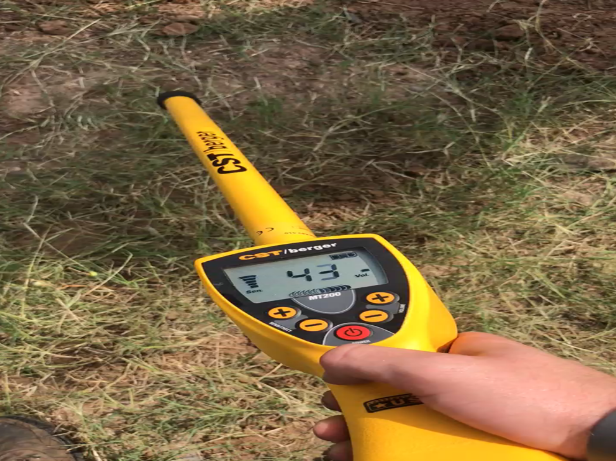
- Locatable and Easy Cover Raising Solutions: CAP is the only composite manhole cover assembly that is fully locatable with standard metal/magnetic detectors while not attaching metals that will corrode. For municipal decision makers, future manhole raises can significantly impact costs, traditional assemblies can add $5,000–$10,000 per manhole and require up to 24 hours for concrete curing. In contrast, CAP’s unique, composite watertight riser ring solution for only CAP assemblies adds just $300–$500 per manhole, and the raise can be completed in less than 30 minutes, saving both time and money on maintenance and upgrades.
- Low Deflection: CAP uses a ribbed design on the underside of the cover to avoid warping. Unribbed bottom composite cover designs are more likely to warp, in the molding process. A warped cover may wobble and potentially pop up, leaving a hazardous open hole.
By considering these factors, municipalities and contractors can ensure that their investment in composite covers delivers both operational efficiency and long-term value.
Upgrade Infrastructure with CAP Composite Manhole Covers
CAP composite manhole covers are engineered to address failures common in iron and lower-grade composites. Winner of the American Composite Manufacturers Association’s Award for Composites Excellence (ACE) in 2020, and nominated again in 2023, CAP products are now installed in over 1000 cities and 48 states.
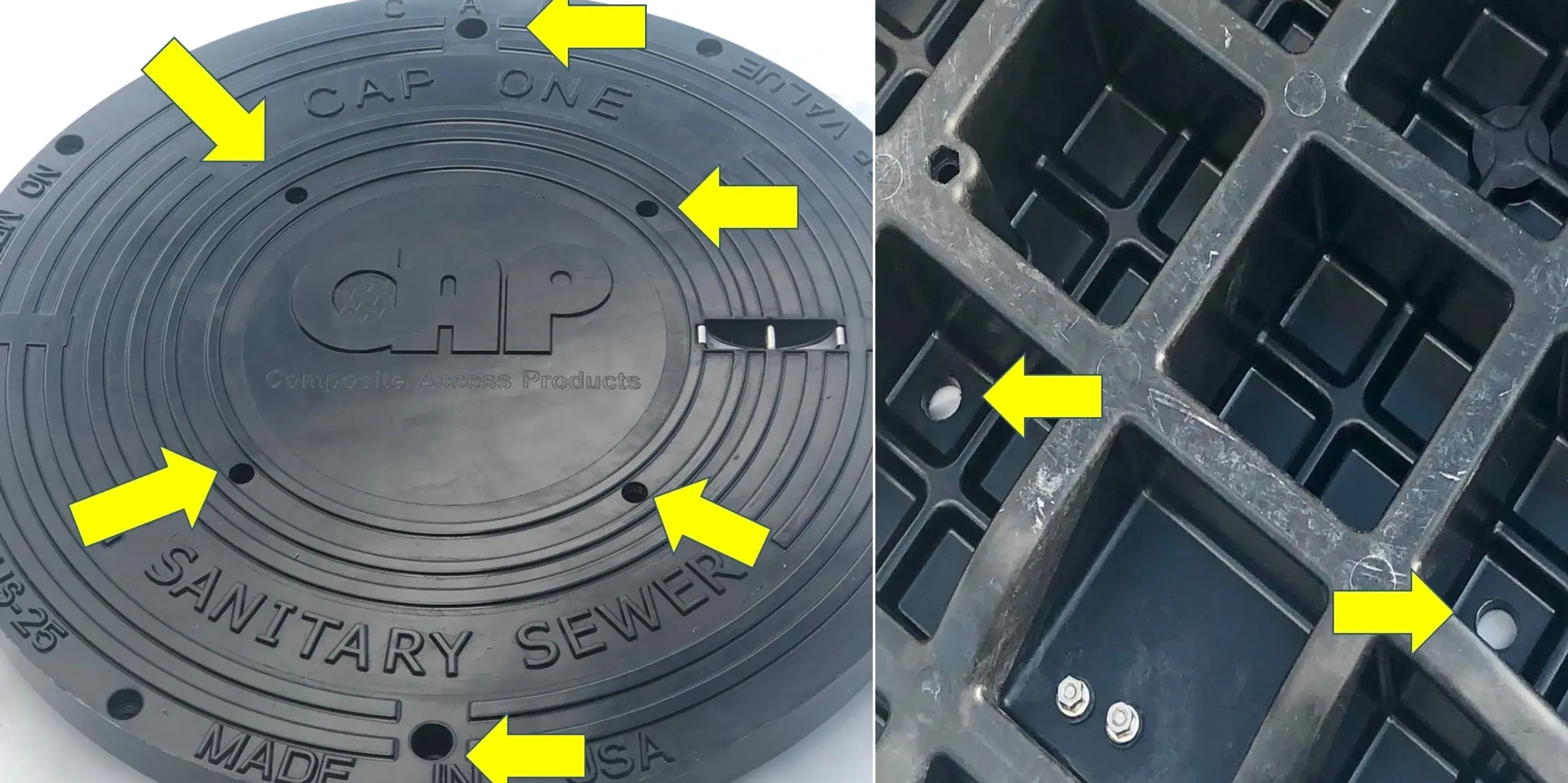
CAP was the first company to mold traffic-rated composite covers in the USA using compression molding, and is the first U.S. composite manufacturer with an unrestricted “within roadway” DOT approval. CAP is also the only composite cover with the option to add molded-in vent holes strategically placed in non-structural locations. Together with CAP’s ribbed structure (the ribs act as the structural members), these holes do not affect load strength while improving performance.
Most CAP models are approximately 4.5 inches thick, versus others that are only 1.5 inches thick, lowering the center of gravity so the cover sits deeper in the frame and resists lift under traffic.
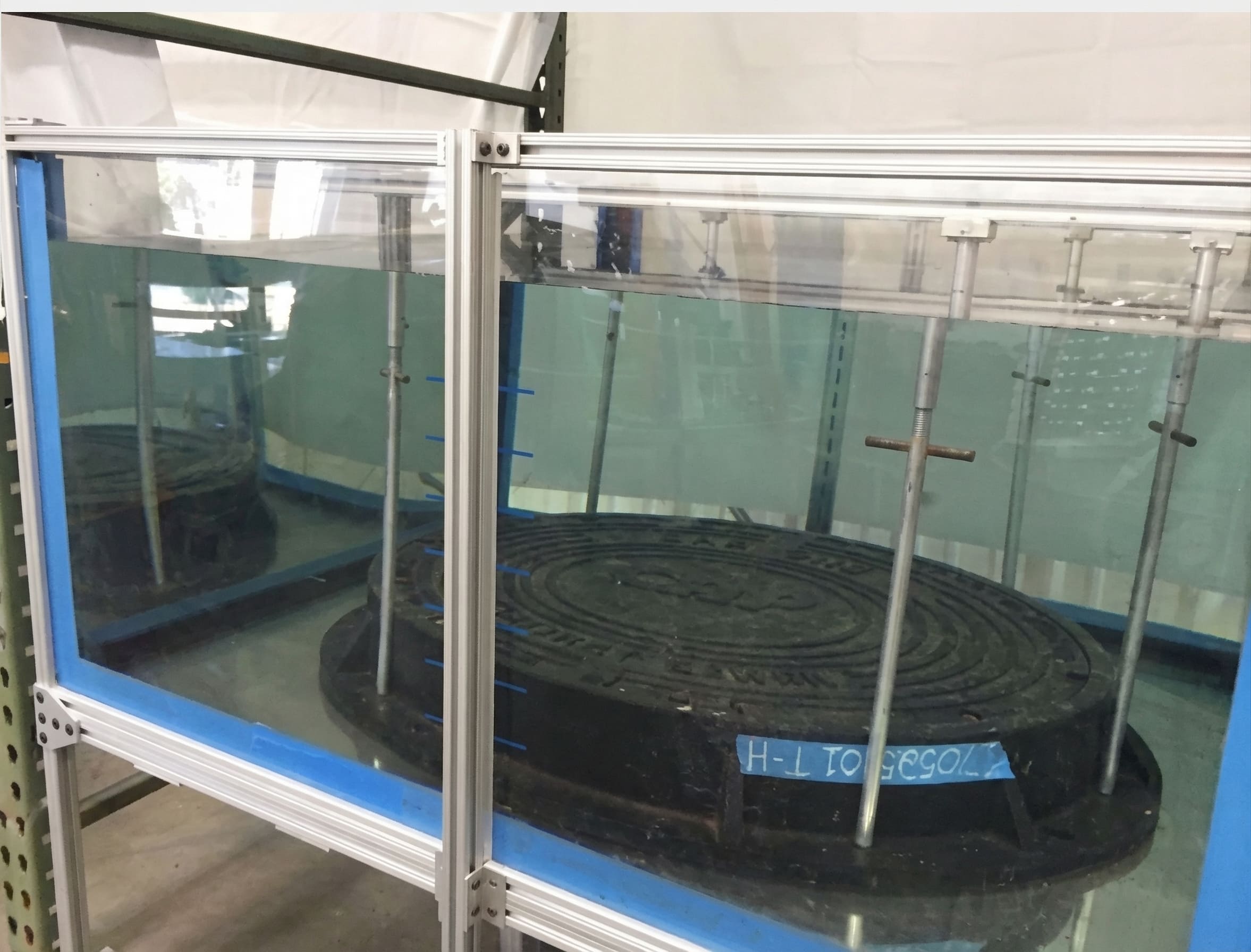
After the AASHTO M306 Proof Load test, CAP covers show zero permanent deformation. While deflection-under-load remains minimal (1/8th to 1/4 inch) at 50,000 pounds pressed, testing confirms the covers can withstand total loads exceeding 100,000 pounds without structural damage. They do not flex back, rebound, or distort over time.
It is also important to note that permanent deformation and rated load strength do not tell the whole story when it comes to non-metallic covers. Even when no permanent deformation is visible, deflection under load can still occur and possibly generate upward kinetic energy. This type of deflection may be less apparent than with metallic covers because metal covers can stay bent after releasing the test load creating the permanent deflection. Non-metallic materials have a “material memory” and tend to return to their original shape. However, this temporary deflection can still create serious safety issues, issues that CAP products are specifically designed to prevent.
Thermoset resin shrinkage is controlled through ribbed geometry on the cover underside, preventing warping, wobble, and pop-outs, which have been seen with some flat-bottomed composite covers. Security bolts feature ten full threads, three times more than some imported alternatives, providing a secure hold that withstands vibration and repeated traffic loads.
CAP’s composite material is signal-transparent, eliminating the need for antenna holes and making these covers ideal for smart city integration. CAPs also have molded-in attachment points that can be used to bolt-on technology without damaging machining, screwing, or drilling holes.
All CAP covers also include a patented encapsulated neodymium magnet, allowing crews to locate them with standard metal detectors. Other composite covers could take hours to locate after an asphalt overlay, costing your city additional labor hours. For advanced asset management, RFID-enabled CAP RF covers are available for tracking and monitoring.
Discover how CAP composite manhole covers can improve reliability and efficiency across your infrastructure projects. Learn more and connect with our team here: Contact Us.
*The descriptions in this article regarding iron manhole covers may not represent the performance of all traditional materials, manufacturers, processes, treatments, installations, system types, geographic locations, practices, or other conditions.